
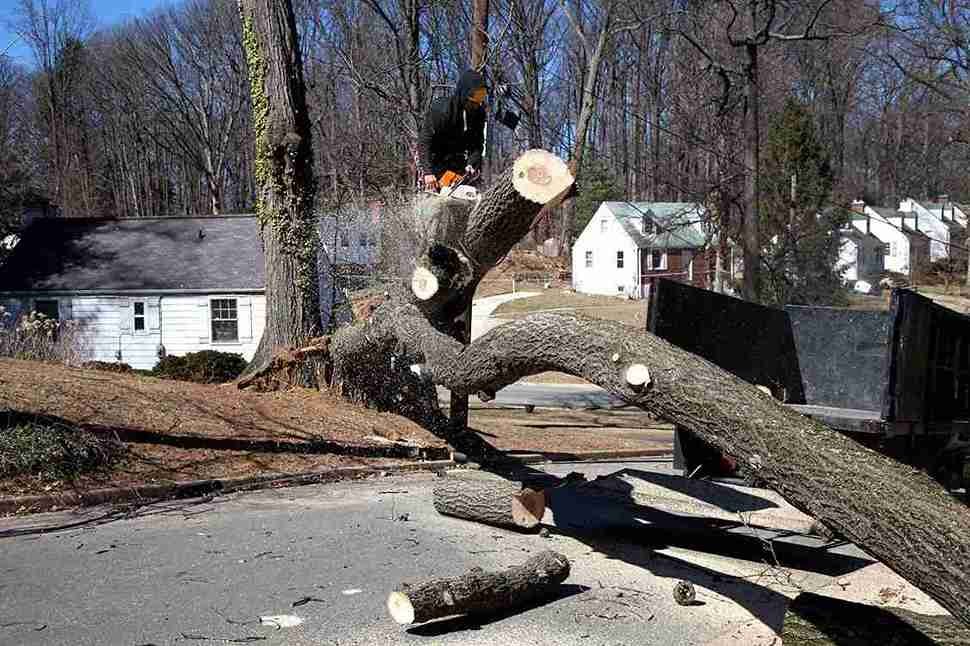
You’ve decided a tree needs to come down. Sounds simple — but did anyone mention you might need permission first? In England, removing a protected tree without authorisation could mean an unlimited fine, a criminal record, or a council order to plant a replacement at your own expense. At LH Tree Services, we’ve helped hundreds of Blackpool homeowners navigate tree removal permits and council permissions. This guide tells you exactly where you stand — before the first cut is made.
Why Does the UK Require Permits for Tree Removal?
Trees are a protected natural resource. Beyond their aesthetic value. They play a vital role in managing air quality, reducing surface water flooding, supporting biodiversity and maintaining the character of our towns and neighbourhoods. Blackpool’s leafy residential streets — from Bispham to Lytham Road — owe much of their charm to mature tree cover that has taken decades to establish.
The legal framework governing tree removal in England has evolved significantly since the Town and Country Planning Act 1990, which gave local authorities the power to issue Tree Preservation Orders (TPOs). Since then additional protections have been introduced through Conservation Area legislation Forestry Commission licensing and various planning regulations — creating a layered system that can feel complex from the outside.
The law doesn’t just protect trees for the sake of it. Every mature tree removed without thought is a loss that takes 30, 40, sometimes 50 years to replace. Permits exist to make sure that decision isn’t taken lightly.” — LH Tree Services, Blackpool
Tree Preservation Orders (TPOs) — What You Need to Know
A Tree Preservation Order is a legal protection placed on a specific tree or group of trees. Or woodland by the local planning authority — in Blackpool’s case, Blackpool Council. Once a TPO is in place, it is a criminal offence to cut down, uproot, top, or lop. Or carry out any work on that tree without first obtaining written consent from the council.
How Do I Know If My Tree Has a TPO?
This is one of the most common questions we receive at LH Tree Services. Many homeowners are completely unaware that a tree in their garden carries a TPO — and discover it only when they attempt to remove it.
You can check whether your tree is protected by:
- Searching Blackpool Council’s online planning portal for TPO records
- Contacting Blackpool Council’s planning department directly
- Checking your property’s Land Registry or solicitor’s records (TPOs are often flagged during conveyancing)
- Asking a qualified arborist — we check TPO status as standard before quoting for any work
What Happens If You Remove a TPO Tree Without Permission?
The consequences are serious. Under the Town and Country Planning Act 1990, removing a protected tree without consent is a criminal offence carrying an unlimited fine. In some cases, councils also issue enforcement notices requiring the landowner to plant a replacement tree of comparable value — at their own expense.
We’ve seen cases across the Fylde Coast where homeowners faced significant financial penalties simply because they weren’t aware a TPO existed. It’s a costly mistake — and one that’s entirely avoidable with a quick check before any work is carried out.
Trees in Conservation Areas — Different Rules Apply
Even if your tree doesn’t have a specific TPO, it may still be legally protected if it sits within a designated Conservation Area. Blackpool has several such areas, particularly around its historic seafront and Victorian residential districts.
The Six-Week Notification Rule
If you wish to carry out work on a tree with a trunk diameter greater than 75mm measured at 1.5 metres from the ground within a Conservation Area. You must submit a written notification to Blackpool Council at least six weeks before any work begins.
This notification period gives the council time to assess the tree and decide whether to place a TPO on it. If no response is received within six weeks, you may proceed with the planned works — but this silence is not a formal approval so it’s always wise to keep written records.
Top Tip: LH Tree Services handles all council notifications on behalf of our clients as part of our managed tree removal service. We take the paperwork off your hands so you can focus on the outcome, not the admin.
When Is Permission NOT Required for Tree Removal?
Not every tree removal in Blackpool requires a permit. There are circumstances under which you are legally entitled to proceed without counsel approval:
- The tree is not subject to a TPO and is not located within a Conservation Area
- The tree is dead — councils generally do not require consent to remove dead trees, though written confirmation is advisable
- The tree is dying or poses an immediate danger to life or property (emergency works may proceed, but the council must be notified as soon as reasonably practicable)
- The tree has a trunk diameter of less than 75mm at 1.5 metres from the ground
- The work is specifically required by a planning condition attached to a planning permission
Even in these circumstances, we always recommend getting professional advice before proceeding. At LH Tree Services, we carry out a full TPO and Conservation Area check on every job as a matter of course — it protects you, and it protects us.
Forestry Commission Felling Licences — Does This Apply to You?
For larger-scale tree felling — particularly on rural or semi-rural land — a Forestry Commission Felling Licence may also be required. This applies to felling more than five cubic metres of timber per calendar quarter on any given land holding.
In a residential context in Blackpool, this threshold is rarely reached by a single tree removal. However, for those undertaking significant site clearance projects. Perhaps for a new development or a larger garden renovation — it’s a regulation worth being aware of.
Applications for felling licences are made directly to the Forestry Commission England via their online portal. Certain exemptions apply — for example, trees in gardens, orchards. And churchyards are generally exempt from the licensing requirement.
How to Apply for Tree Removal Permission in Blackpool
If your tree is protected by a TPO, you’ll need to submit a formal application to Blackpool Council before any work is carried out. Here’s what the process typically involves:
Step-by-Step Application Process in Blackpool
- Step 1: Identify the tree’s status: Check TPO records and Conservation Area boundaries via the Blackpool Council planning portal or by contacting the planning department
- Step 2: Obtain an arboricultural report: In many cases, councils require a professional assessment from a qualified arborist to justify the proposed works
- Step 3: Submit the application: Complete the relevant form (available via the Planning Portal UK) and submit it along with supporting documentation
- Step 4: Await a decision: Blackpool Council typically aims to respond within eight weeks, though this can vary
- Step 5: Proceed with approved works: Once written consent is received, tree removal can be scheduled strictly in accordance with any conditions attached to the approval
LH Tree Services provides full arboricultural reporting and application support for clients across Blackpool and the surrounding Fylde Coast area. We know what councils look for — and how to present a compelling, well-evidenced case for tree removal.
Wildlife Considerations — An Often Overlooked Requirement
Separate to planning permission tree removal in Blackpool — particularly during the spring and summer months — must take into account the presence of protected wildlife. Bats and nesting birds are both protected under UK law, and disturbing them during tree removal can constitute a separate criminal offence under the Wildlife and Countryside Act 1981.
- Bat surveys are required if there is any reasonable likelihood of bats roosting in the tree
- Nesting bird surveys should be conducted between March and August
- Natural England may need to be notified if a protected species is confirmed
As part of every tree removal assessment we carry out. LH Tree Services checks for signs of bat roosts and active bird nests. If there is any doubt we recommend a formal ecological survey before work proceeds.
Let LH Tree Services Handle the Permits
Navigating tree removal permits in Blackpool doesn’t need to be stressful. With the right professional in your corner the process is straightforward. Well-managed and fully compliant with all local and national regulations.
At LH Tree Services, we handle everything from initial TPO checks and council notifications to arboricultural reporting and post-removal site clearance. We’ve built a reputation across Blackpool and the Fylde Coast for doing things properly — because cutting corners isn’t something we do, professionally or legally.
Frequently Asked Questions
How long does a TPO application take in Blackpool?
Blackpool Council typically aims to process TPO applications within eight weeks of receiving a valid submission. Straightforward cases with clear justification are often resolved more quickly.
Can I appeal if my tree removal application is refused?
Yes. If Blackpool Council refuses your application, you have the right to appeal to the Planning Inspectorate. An experienced arborist can provide supporting evidence for your appeal and represent your case professionally.
Do I need permission to prune a protected tree, or only to remove it?
Both. Any significant pruning, lopping or topping of a TPO-protected tree requires council consent — not just full removal. Even well-intentioned pruning work carried out without permission can result in a fine if it significantly affects the tree’s health or appearance.
What if a tree is damaging my property — can I remove it without permission?
Not automatically. Even if a protected tree is causing damage to your foundations drains or structures you still need to apply for consent before removing it. An arboricultural report documenting the damage will significantly strengthen your case.
Comments are closed