
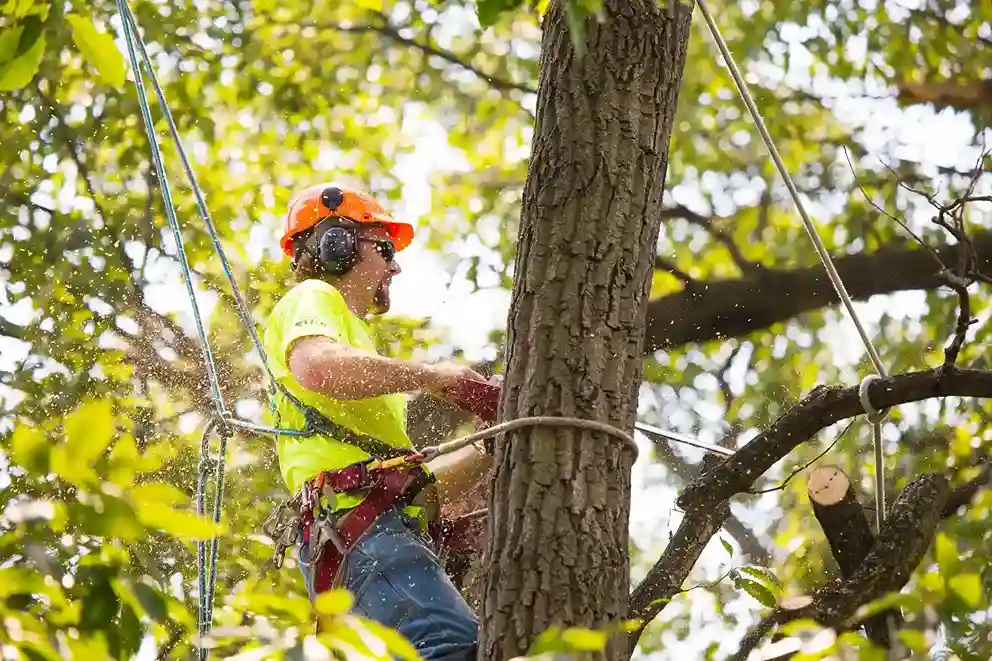
Have you ever looked at a towering diseased tree in your garden and thought? Will I just pop up with a chainsaw and sort that myself? If so you’re not alone — but you may be putting yourself your neighbours and your property at serious risk. Tree removal service Blackpool is one of the most hazardous jobs in the horticultural industry and without the right training equipment and knowledge what seems like a straightforward job can turn fatal within seconds.
According to the Health and Safety Executive (HSE), tree work accounts for a disproportionately high number of serious workplace injuries in the UK each year. From falling limbs to chainsaw kickback and unstable root systems the dangers are very real. And very preventable when the right protocols are followed.
Why Tree Removal Safety Is Non-Negotiable
Tree removal isn’t simply about cutting a tree down. It’s a complex, multi-stage process that involves assessing the tree’s condition, the surrounding environment, overhead power lines, underground utilities, nearby structures, and dozens of other variables — all before a single saw blade touches the bark. A tree may look stable from the outside but be entirely hollow or structurally compromised within.
Only a trained arborist can identify these risks before they become accidents. This is why the industry relies on strict safety guidelines, many of which are enforced by the Arboricultural Association and guided by British Standard BS 3998:2010 — the benchmark for tree work in the United Kingdom.
Step 1: Conducting a Thorough Risk Assessment
Before any tree removal work begins a qualified tree surgeon must carry out a full site risk assessment. This is not a box-ticking exercise — it is a critical stage that informs every decision made during the job.
What a Risk Assessment Covers
- Tree species height and estimated weight
- Structural integrity including signs of decay rot, fungal growth, or storm damage
- Proximity to buildings fences roads and neighbouring properties
- Overhead cables and underground utilities (contacted via Dial Before You Dig)
- Ground conditions saturated or uneven ground increases the risk of equipment movement
- Wildlife checks particularly for bats and nesting birds protected under UK law
At LH Tree Services, we never skip this stage. A thorough risk assessment is what separates a professional outfit from a rogue trader operating without due diligence.
Step 2: Correct Personal Protective Equipment (PPE)
Every operative on site must wear appropriate PPE throughout the duration of the job — no exceptions. Working without the correct protective gear dramatically increases the risk of life-changing injury.
Required PPE for Tree Removal in the UK
- Chainsaw-resistant trousers (Class 1 minimum, Class 2 for climbers)
- Steel-capped, chainsaw-protective boots
- Hard hat with integrated face shield and ear defenders
- High-visibility vest especially when working near roads or public footpaths
- Kevlar-lined gloves for hand protection
- Harness and climbing equipment (for aerial work)
All PPE used by professional tree surgeons in the UK must meet the relevant British and European safety standards. If a contractor turns up without proper PPE that’s a red flag walk away.
Step 3: Establishing Exclusion Zones and Safe Working Areas
One of the most overlooked yet critically important safety measures is the establishment of a proper exclusion zone around the work area. This protects not just the operatives but members of the public, pets, and neighbouring properties.
Industry Guidelines for Exclusion Zones
As a general rule the exclusion zone should extend to twice the height of the tree being felled in all directions. On public roads and pavements appropriate signage and cones must be placed in line with Chapter 8 of the Traffic Signs Manual.
At LH Tree Services, we always assess the specific environment before determining exclusion zone parameters. In tight residential areas of Blackpool this often requires careful coordination with neighbours and, in some cases local council notification.
Step 4: Using Safe and Proven Felling Techniques
There is no one-size-fits-all approach to tree removal. The method used depends entirely on the size of the tree its location its structural condition and the space available for controlled felling.
Common Tree Removal Techniques Used by Professionals
- Straight felling: Only suitable where there is ample clear space in the intended fall direction
- Sectional dismantling: The tree is removed in sections from the top down, using ropes and rigging equipment to control each piece
- Crane-assisted removal: Used for very large or hazardous trees where no other method is safe
- Aerial tree removal: Climbers ascend the tree and section it from within the canopy
In many residential areas across Blackpool from Layton to South Shore sectional dismantling is the method of choice as it allows precise control over where each piece of timber lands. This is a skill that takes years to master safely, which is why DIY tree removal in confined spaces is strongly discouraged.
Step 5: Safe Stump Removal and Site Clearance
Once the tree itself has been safely removed, the work isn’t over. Stumps left in the ground can be trip hazards can attract pests and can cause ongoing root damage to nearby structures, especially in older properties common across Blackpool’s residential streets.
Stump Removal Safety Considerations
- Professional stump grinders are heavy machinery only trained operatives should use them
- Underground utility checks must be repeated before grinding begins
- Flying debris from stump grinding requires all bystanders to be at a safe distance
- Grinding depth must be appropriate to prevent damage to surrounding root systems
LH Tree Services provides complete site clearance as part of our tree removal packages, leaving your garden clean tidy and safe with no trip hazards or hidden root damage left behind.
How to Identify a Safe Reputable Tree Surgeon in Blackpool
Not all tree surgeons are equal. With tree work, you truly get what you pay for and a cheap quote from an unlicensed operator. Could cost you considerably more in property damage liability claims, or worse.
What to Look For When Hiring a Tree Surgeon
- NPTC (National Proficiency Test Council) qualified operatives
- Full public liability insurance minimum £5 million cover recommended
- Membership of the Arboricultural Association
- Evidence of previous work and verifiable local reviews
- A written quote with clear scope of works no verbal-only agreements
- Willingness to conduct a pre-job site visit
At LH Tree Services, we are fully insured qualified and transparent with every client we work with across Blackpool and the surrounding Fylde Coast area. We’re happy to provide documentation of our credentials before any work begins.
Seasonal Safety Considerations for Tree Removal in Blackpool
Blackpool’s coastal climate with its blustery winds off the Irish Sea presents additional challenges for tree work that simply don’t apply inland. Wind speed and direction can dramatically affect the control of falling timber, making seasonal planning particularly important.
- Autumn and winter: Prime time for structural removal, as leafless trees offer better visibility of the canopy and branch structure
- Spring: Wildlife surveys are essential before any work begins, as nesting season runs from March to August
- Summer: Heavy canopies add significant weight and can make directional felling unpredictable
- Post-storm emergency work: Always requires additional caution due to compromised structural integrity
We provide emergency tree services in Blackpool throughout the year, including rapid response for storm-damaged trees that pose an immediate risk to life or property.
Need Professional Tree Removal Services in Blackpool
Whether you have a single hazardous tree that needs removing or require a full site clearance, the team at LH Tree Services is ready to help. We carry out all work in strict accordance with UK safety guidelines, using fully trained operatives and industry-standard equipment.
Conclusion
Tree removal is never a task to take lightly — and in a coastal town like Blackpool, where unpredictable weather and densely packed residential streets add an extra layer of complexity, getting it right matters more than ever. From carrying out a thorough risk assessment and wearing the correct PPE, to using proven felling techniques and ensuring full site clearance afterwards, every step in the process exists for a reason: to protect you, your property, and everyone nearby. At LH Tree Services, we follow every one of these safety guidelines on every job we carry out — no shortcuts, no compromises. If you have a tree that needs attention, don’t leave it to chance.
Frequently Asked Questions (FAQs)
Is tree removal in Blackpool subject to any planning restrictions?
Yes. If your tree is within a Conservation Area or protected by a Tree Preservation Order (TPO), you must notify or obtain consent from Blackpool Council before carrying out any significant work. LH Tree Services can help you navigate this process.
How long does a typical tree removal take?
This depends entirely on the size and location of the tree. A small garden tree can be removed in a couple of hours, whilst a large, mature oak in a restricted space may require a full day or more. We’ll give you a realistic timeframe during your pre-job assessment.
Comments are closed