
Tree’s gone — but that stump is still sitting there, isn’t it? Most Blackpool homeowners don’t think about it until it becomes a trip hazard, attracts pests, or starts sprouting shoots across the lawn. At LH Tree Services, we’re asked the same questions every week: Is stump removal safe? Will it damage my garden? The honest answer — yes, it’s completely safe when done properly. This guide explains the process, the risks of leaving it, and why acting sooner always saves you money.
Why Leaving a Tree Stump in Your Garden Is a Bigger Problem Than You Think
It’s tempting to leave a stump in place. Out of sight, out of mind — especially if it’s tucked away in a corner of the garden. But over time, an untreated stump can cause a surprising range of problems, many of which homeowners across Blackpool don’t discover until they’ve already become costly issues.
1. Stumps Attract Pests
A decaying stump is essentially a five-star hotel for wood-boring insects. Beetles, ants, and wood wasps are all drawn to rotting timber — and once established, these colonies don’t always stay in the stump. They can spread to nearby garden structures, fences, and even the timber framework of your home.
We’ve visited properties in Blackpool’s older residential areas where a neglected stump left for several years had become a significant source of ant and beetle infestation — requiring pest control treatment in addition to stump removal. It’s an avoidable situation.
2. Honey Fungus — A Serious Garden Threat
One of the most damaging consequences of leaving a stump to rot is the risk of honey fungus (Armillaria) — a highly destructive fungal infection that spreads through the soil via root systems. According to the Royal Horticultural Society (RHS), honey fungus is the most damaging plant disease in UK gardens, capable of killing a wide range of trees, shrubs, and herbaceous plants.
Honey fungus spreads underground and can travel from a decaying stump to healthy plants metres away. By the time the symptoms appear on neighbouring plants, the infection is often already well established.
Removing the stump promptly — before decay sets in — significantly reduces the risk of honey fungus establishing in your garden.
3. Regrowth and Root Damage
Many tree species will attempt to regrow from a cut stump, sending up clusters of shoots around the base. Left unchecked, this regrowth can be vigorous and difficult to manage — and the continued root activity can cause damage to nearby paths, patios, drains, and foundations, particularly in the older terraced and semi-detached properties common across Blackpool’s residential streets.
4. Safety Hazards
A stump at ground level — particularly one surrounded by grass — is a genuine trip hazard. This is especially relevant for families with young children, elderly residents, or anyone with reduced mobility. It can also cause damage to lawnmowers and garden machinery if struck unexpectedly.
So — Is Tree Stump Removal Actually Safe for My Garden?
This is the question we’re asked most often, and the answer depends on one key factor: who is carrying out the work and how. Professional stump removal, carried out by a qualified team using the correct equipment, is entirely safe for your garden — including your lawn, surrounding plants, and any nearby structures. The process is controlled, precise, and leaves your garden in a condition where it can be quickly restored.
What About DIY Stump Removal?
This is where things get more complicated. DIY stump removal — whether using chemicals, a hired grinder, or manual digging — carries significantly more risk than professional removal, both to your garden and to yourself.
- Chemical stump removers can leach into the surrounding soil and affect nearby plants and lawn grass
- Incorrectly operated stump grinders can cause serious injury — they are powerful, heavy machinery that require proper training to use safely
- Manual digging around root systems can disturb underground utilities, drainage pipes, and neighbouring root systems
- Incomplete removal — leaving large sections of root in the ground — can still lead to regrowth and fungal issues
At LH Tree Services, we use professional-grade stump grinding equipment operated by fully trained, NPTC-qualified operatives. We carry out an underground utility check before grinding begins, and we work to a depth that eliminates regrowth whilst protecting the surrounding soil structure.
How Does Professional Stump Removal Work in Blackpool?
Understanding the process helps homeowners know exactly what to expect — and why professional removal is the safest, most effective option.
Stage 1: Site Assessment
Before any grinding begins, our team assesses the tree removal and the surrounding area. We check for underground utilities using our standard pre-work process, identify any nearby plants or structures that require protection, and determine the appropriate grinding depth based on your intended use of the space afterwards.
Stage 2: Stump Grinding
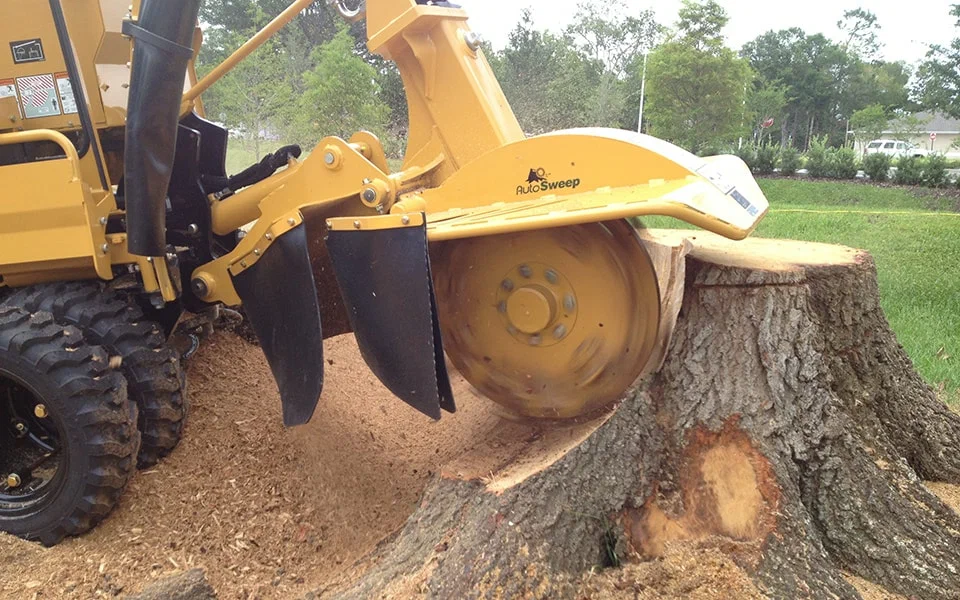
We use a professional stump grinder to systematically grind the stump down below ground level — typically to a depth of 150–300mm, depending on the size of the stump and what you plan to do with the space. The grinder reduces the stump and surface roots to a fine mulch of wood chippings. The process is controlled and precise. Flying debris is managed through the grinder’s guard system, and we ensure all bystanders are at a safe distance throughout.
Stage 3: Clearing and Restoration
Once grinding is complete, we clear the wood chip mulch from the area. You have two options here: we can remove the chippings entirely from site, or leave them for use as garden mulch — they make excellent natural mulch for borders and beds. We then backfill the hole with a soil and compost mix, leaving the area level and ready for turfing, seeding, or planting.
What Impact Does Stump Removal Have on the Rest of My Garden?
This is the specific concern most Blackpool homeowners raise — and it’s a completely valid one. Here’s what you can realistically expect:
- Lawn: Some disruption to the immediate surrounding grass is inevitable. But the area is quickly restored with topsoil and seed or turf
- Nearby plants and shrubs: professional grinding does not affect neighbouring plants when carried out correctly
- Borders and beds: root mulch left in the soil will break down naturally over 1–2 years, enriching the soil as it does
- Paths and patios: adjacent hard landscaping is protected during the grinding process
- Underground utilities: pre-work checks ensure pipes and cables are identified and avoided
Top Tip: If you’re planning to returt or reseed the area after stump removal. Wait 2–4 weeks after grinding to allow the soil to settle. LH Tree Services can advise on the best approach for your specific garden and soil type.
Stump Grinding vs Chemical Removal — Which Is Safer for Your Garden?
Many homeowners consider chemical stump removal as a cheaper, less disruptive alternative. It’s worth understanding the differences before making a decision.
Chemical Stump Removal
- Uses potassium nitrate or similar compounds to accelerate decay
- Takes several months to a year or more to fully break down the stump
- Chemicals can leach into the surrounding soil, potentially affecting lawn and plant health
- Does not prevent regrowth in the short term
- Leaves rotting material in the ground, which can still attract pests and fungal disease
Professional Stump Grinding
- Immediate results — stump removed in a single visit
- No chemicals — completely safe for surrounding plants, lawn, and soil
- Eliminates regrowth by removing the root crown below ground level
- Reduces risk of honey fungus and pest infestation
- Area ready for restoration immediately after grinding
For the vast majority of gardens in Blackpool, professional stump grinding is the safer, faster, and more effective solution.
Contact LH Tree Services Today
Whether you’ve recently had a tree removed or have been living with an old stump for years, LH Tree Services is ready to help. We provide safe, professional tree stump removal across Blackpool and the wider Fylde Coast — including Lytham St Annes, Fleetwood, Thornton-Cleveleys, and Poulton-le-Fylde. Contact LH Tree Services today for a FREE, no-obligation stump removal quote in Blackpool. We’ll assess your stump, explain the process, and give you a clear, honest price — with no hidden extras. Call us or visit our website to book your free site visit.
Conclusion
A tree stump might seem harmless at first glance, but left untreated it can become a source of pests, fungal disease, regrowth, and ongoing inconvenience in your garden. The good news is that professional tree stump removal in Blackpool is a safe, quick, and highly effective solution — with minimal impact on the rest of your garden when carried out by an experienced team. At LH Tree Services, we’ve removed hundreds of stumps across Blackpool and the Fylde Coast, restoring gardens to a clean, usable state that homeowners can enjoy again. Don’t let that stump hold your garden back — get in touch today and let us take care of it properly.
Frequently Asked Questions (FAQs)
How much does tree stump removal cost in Blackpool?
Stump removal costs vary depending on the size, species, and accessibility of the stump. As a guide, smaller stumps typically start from around £60–£80, with larger stumps priced accordingly.
How long does stump grinding take?
Most residential stumps can be ground out within one to two hours. Larger stumps, or those with extensive surface root systems, may take longer. We’ll give you a realistic timeframe when we assess the stump in person.
Will the stump grow back after grinding?
No. Professional stump grinding removes the root crown below ground level, which prevents regrowth. Chemical treatments and surface cutting, by contrast, can leave enough of the root system intact to allow new shoots to emerge.
Can you remove a stump close to my house foundations?
Yes, in most cases. We assess each stump individually and use appropriately sized equipment to work safely in confined spaces. We’ll always advise honestly if a stump’s proximity to foundations, utilities, or structures presents any specific challenges.
Comments are closed